

Take Control and Dominate Your Financial Future
Let me be crystal clear: your financial future is non-negotiable. It’s not just about how much you make—it’s about how much you keep and grow. Most Americans are asleep at the wheel with their 401(k)s, blindly trusting an industry that’s quietly robbing them of decades of retirement income through outrageous fees. I see this as a massive injustice—and it fires me up every time. When it comes to your 401(k), fees are a silent killer, eating away at your wealth one percentage point at a time. You don’t have to be a financial genius to understand this—any increase in fees steals YEARS from your retirement. That’s why understanding, owning, and controlling what you pay in fees isn’t just smart—it’s essential. This blog is about stepping up and dominating the financial game, not just playing it. Because financial freedom is a gift you owe yourself, and it starts by getting ruthless with fees.
Fees Matter in Your 401(k): The Silent Wealth Killer
Recently I experienced the honor of named to Worth Magazine’s 100 Most Powerful People in Global Finance, and this humbling opportunity has allowed me to shine a light on something I am very passionate about – financial freedom for Americans.
The average American today has their wealth in two places – their home and their 401(k). And they both have levels of abuse that most people cannot imagine. Consider this: For 30 years, the 401(k) industry didn’t have to tell anybody how much they were charging! Now that they must disclose, 401(k) providers bury their fees deep within long and difficult to understand documents, effectively keeping their customers in the dark.
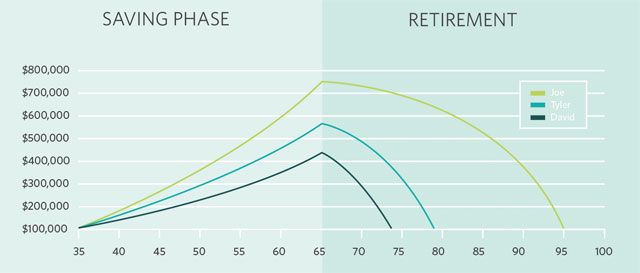
But what the majority of Americans don’t realize is that an increase in 1% in fees will cost you 10 years in retirement income!
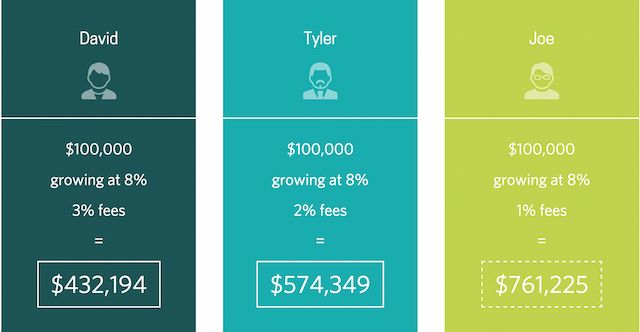
I like to tell this story as an example; three childhood friends, David, Tyler and Joe, at age 35 all have $100,000 to invest. Each selects a different mutual fund, and all three are lucky enough to have equal performance in the market of 8% annually. At age 65, they get together to compare account balances. On deeper inspection, they realize the fees they have been paying are drastically different from one another. They are paying annual fees of 1%, 2%, and 3% respectively. The impact on their ending account balance is profound.