How coaching creates a framework for sustainable growth
You already know what to do. You've read the books, attended the trainings, and mapped the strategy. Yet progress still feels slower than it should. The gap isn't intelligence, effort, or ambition—it's structure and feedback. Growth doesn't stall because leaders lack drive; it stalls because there's nobody holding them accountable.
A pillar of Tony Robbins' business transformation coaching is that "it's not what we do once in a while that shapes our lives. It's what we do consistently."
The leaders who scale fastest aren't more driven or intelligent; they're more structured. They design their days, priorities, and decision-making so progress happens even when confidence wavers or pressure rises. They rely on systems—not willpower—to keep them consistent.
That's why coaching accelerates growth: it installs structure where intention used to live and creates feedback loops that keep leaders aligned, focused, and moving forward.
Raise your standards to create long-lasting changes in yourself
We all crave motivation. It's that rush of energy from reading a great quote or watching an inspiring video. The problem with motivation, however, is that it's unreliable. Motivation makes you feel good, but it doesn't always translate into taking action. You can't count on it when obstacles arise or when you're tired and overwhelmed. Without systems in place, all motivation will eventually fade.
What you need is discipline anchored to structure. Discipline is taking consistent action, no matter how you feel. When you incorporate structure and accountability, you create a system engineered to produce results no matter what challenges arise.
In real life, those numbers show up as the team member who comes back sharper, retains what they absorbed, and holds their standard when the pressure is highest. The data confirms what Alexzander already knew: Supporting your people's growth isn't a cost. It's a return on investment. […]
If you're an entrepreneur or business leader, it isn't a matter of if you'll hit a performance plateau. Everyone does. It's a matter of what you choose to do when it happens.
One of the biggest surprises in entrepreneurship is that the same habits and traits that made your business successful in the beginning can become the very things that hold you back from growing.
Growth and contribution are essential human needs. They bring meaning to your life. And to meet those needs, you have to step outside your comfort zone.
He was 22 the first time he walked into Unleash the Power Within. By then, Andrew Sossin had already heard Tony say your peer group can bring you down, you can bring them up, or you can find a new one. Instead of finding a new one, he brought his existing peer group somewhere the standard was higher than anything they'd experienced and let that raise all of them at once. […]
Who are the people you spend the most time with? Take a hard look. Are they pushing you forward? Are they raising your standards? Are they doing things you aspire to do? If the answer is no, that's not a small thing. It's everything. Proximity is power. And most people give that power away without even knowing it. […]
Goals without structure are simply good intentions. A coach takes your dreams and turns them into actionable plans. One key tool that executive business coaches use is the Rapid Planning Method (RPM). The RPM isn't just a to-do list; it's a framework that moves you from dreams to reality by answering three core questions:
What do I really want?
Why do I want it?
What do I need to do? (The Massive Action Plan)
The structure is simple, but incredibly effective. By getting crystal clear on your goals, you can set measurable objectives and track progress. Aligning your outcomes with purpose gives you the determination to keep moving forward when things get tough. Creating a Massive Action Plan means building a roadmap to achieve your vision. With this structure in place, your actions align with your priorities. You won't waste any more time spinning your wheels.
Don't make another important decision before you listen to Tony's free audio lesson
Action alone isn't enough. Consistent feedback is how you learn from both successes and failures, adjust in real-time, and stay focused on your long-term vision. Without feedback, effort is like driving with your eyes closed; you might be moving, but are you moving in the right direction?
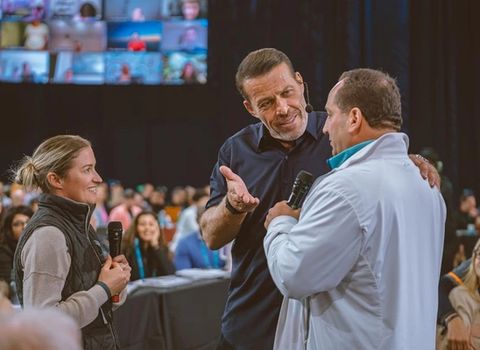
This is where a coach becomes invaluable. A coach not only holds you accountable and ensures that you stay on track, but they also offer an outside perspective. Since they aren't bogged down by the day-to-day, they can see what's working and what isn't. They'll spot hidden patterns, emotional reactions under stress, avoidance behaviors, and gaps in your leadership skills. They ask the tough questions that you might not ask yourself and help uncover how your identity and limiting beliefs are influencing your decisions.
Even top-tier leaders face roadblocks when their psychology gets in the way, and that's why they turn to coaches for honest, reliable feedback. Consistent feedback, combined with accountability, condenses growth and accelerates learning.
Ask Tony anything and get a real answer 24/7! Have a personal conversation with Tony Robbins today
How coaching provides the framework for sustainable growth
Business results coaching isn't about giving leaders a one-size-fits-all answer or generic skills. It's about creating a system for evaluation, feedback, accountability, and adjustment. With the right structure, growth becomes automatic. Here's how coaching can provide you with the framework for consistent action:
1. Clarify outcomes and purpose
Using the RPM method, coaching helps you identify exactly what you're working toward and why it matters. With a strong enough vision, you won't need motivation because you'll be pulled toward your goals. A clear sense of purpose makes the process smoother and more compelling, so that the need for motivation becomes secondary. Your purpose is what drives you and keeps you going when challenges arise.
2. Schedule actions that align with priorities
Tony says, "If you talk about it, it's a dream. If you envision it, it's possible. But if you schedule it, it's real." It comes down to massive, determined action. It's about choosing the 20% of actions that will produce 80% of the results. Once you identify those actions, you schedule them, making sure they align with your highest priorities.
Coaching forces you to stop procrastinating and actually make progress. It moves you from intention to execution aligned with your strategic goals.
3. Measure and review progress regularly
You can't manage what you don't measure. Once you commit to taking targeted action, you must measure the results. Regular reviews help you identify whether your actions are yielding the desired results. If something isn't working, coaching helps you make adjustments and find alternative approaches, keeping you on course.
4. Anticipate triggers and adapt
Being prepared for inevitable obstacles—whether it's competition, environmental changes, evolving technology, or unforeseen crises—is a skill every great leader needs. Coaching helps you anticipate triggers and adapt before you're derailed. It guarantees that you're not only reacting to challenges but proactively preparing for them, enabling you to pivot when needed and navigate changes with agility.
Get the guidance you need to grow from the #1 business coach in the world
As your business grows, so do your responsibilities. The stakes get higher, and the cost of mistakes becomes greater. At this stage, relying on motivation alone or your individual leadership capabilities simply isn't enough. You need more than just intelligence and effort; you need structure and consistent feedback to maintain momentum.
Together, they give executives the confidence and capability to lead under pressure, expand their influence, and sustain long-term growth.
Growth by design: building sustainable leadership
Motivation can fuel you for a day, a week, or even a month. But it won't carry you through the ups and downs of scaling a business. For sustained growth, you need systems that last. And that's what coaching offers: a psychological foundation and a structural framework that grows with you as you continue to scale.
Coaching helps you transform your intentions into action, offering you the tools and insights to keep you on track. It provides the external accountability and perspective you need to challenge your assumptions and sharpen your leadership skills. When you invest in coaching, you're investing in both your personal development and the long-term success of your business.
By integrating structure into your daily habits and building feedback loops, coaching ensures that you're not just reacting to circumstances, but proactively driving results. Your growth doesn't just happen by chance; it's a product of careful planning, constant learning, and deliberate action.
Discover Tony's strategies to build a business that performs in any market condition.