
What drives your decisions?
Close your eyes and picture the hustle and bustle of a busy city street. Car horns are blaring. People push past you in a hurry. You notice garbage and debris on the ground, and the street is flanked by buildings that seem to touch the sky.
What drives your decisions?
Now, imagine you are in the middle of an open meadow. Sunlight warms your shoulders and tall grass waves gently in the breeze. You hear the chirping of birds and the subtle buzzing of bees. You feel at peace.
How did you feel during each of these visualizations? The difference between these situations is stark. And, odds are, so is your psychological and physiological response to them. The benefits of nature have been well documented, and it is now common knowledge that we are genetically wired to have an intuitive response to our surroundings.
But just how connected are we to the environment we are in? And how deep is the impact on us mentally, emotionally and physically? How does your environment affect you?
The power of intimate space
Back in 1958, French philosopher Gaston Bachelard published The Poetics of Space, which explores the impact of intimate spaces on the human psyche. Bachelard maintains that our minds thrive in spaces that allow us to daydream and become stagnant in spaces that feel depressing or oppressive. In other words, he was captivated by how our surroundings affect us.
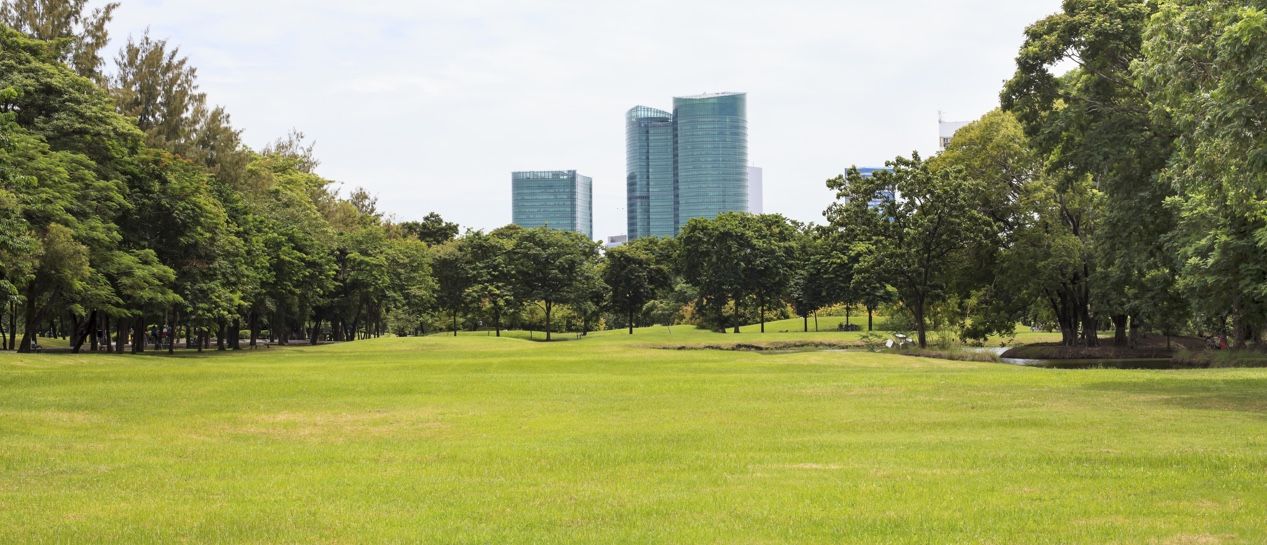
A more recent study by researchers at the University of Illinois at Urbana-Champaign Department of Landscape Architecture examined the relationship between environment and student’s cognitive abilities. They found that high school students performed better on exams if the classroom had a view of a green landscape, rather than if the classroom had a view of another building or a parking lot, or no view at all. Students with an expansive view had less mental fatigue and recovered better from stress, they also discovered.
But these findings are not just limited to students; results are quite similar for those in professional environments, too. In one study focused on employees in a workplace, increased exposure to nature at work made employees less stressed, and it also resulted in fewer filings of generalized health complaints.