“Stories have a unique power to move people’s hearts.”
– Peter Guber, CEO, Mandalay Entertainment
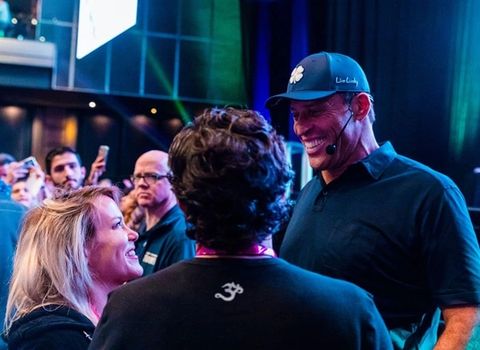
If you’ve been to a Tony Robbins event, you know he is a master of storytelling. Stories help people understand his concepts and create more of an impact. Tony has even worked with The Ariel Group, a unique collaboration that brings in theatre actors to train corporate executives in how to tell a great story. That’s how much he believes in the power of storytelling.
Humans have told stories since we were able to write – and maybe even before that, using hand gestures before there was spoken language. Stories took many forms, from fairy tales to poems. Even music is a form of storytelling. Stories are a part of what makes us human. We relate closely to them. That’s why a compelling story can help us retain information and remember more details. Telling a story can even increase your persuasive powers by creating a positive emotional state in your audience. The better you learn how to tell a story, the more effective you will be in business and in life.
The leaders who scale fastest aren't more driven or intelligent; they're more structured. They design their days, priorities, and decision-making so progress happens even when confidence wavers or pressure rises.
March Madness is not really madness at all. It is mastery. It is what happens when consistency compounds over time and accountability sharpens talent into something reliable under pressure.
We all want to know that when we invest—in time, in money, in energy—that it pays off. So when people ask, "What's the ROI of coaching?" they're usually asking one thing: Will it help me make more money?
Mastery is earned. It’s engineered. It follows a pattern, and anyone willing to commit to that pattern can unlock consistent growth, progress, and results in their life.
Listen first
Whether you’re doing a sales pitch for one executive or a presentation to hundreds, before you can know how to tell a story effectively, you need to get to know your audience: Ask questions. Tell short anecdotes to help you adjust your approach. Listen to feedback. Listening takes the focus off yourself and puts it on your audience. How will your story serve them? How will it improve their lives or empower them to take action?
Read the room
You’ve taken the time to listen and build rapport before you began and you’ve structured a narrative with all the right pieces. You think you’re doing everything right – but the audience isn’t responding. Rather than powering ahead, those who know how to tell a good story read the room and gauge the audience’s reaction. Think of the great comics or performers. They’re able to assess the audience and adjust their body language, tone and even the joke or act itself so that it better connects. This takes excellent communication skills and high levels of perception – both of which are skills you can develop.
Create rapport
Listening to your audience first also helps you build rapport. Building rapport is often thought of in terms of manager/employee relationships or those between coworkers, but you can build rapport with anyone, including large audiences. It sometimes involves asking questions, but it’s often more about communicating authenticity, especially for large audiences. That’s why the best salespeople know how to tell a story first and sell second. A good story shows that they’re empathetic to the needs of the customer and builds trust – and trust is the foundation of influencing others.
Start with emotion
It’s easy for businesspeople to get caught up in statistics, graphs and charts. Information is vital, but emotion is what brings fulfillment and makes life worth living. Think about the most memorable days in your life. Chances are, they were extremely emotional: graduation, your wedding day, the birth of a child. Storytelling taps into these emotions. As Bob Iger, former CEO of Disney, has said, “People still love a good story, and I don’t think that will change.” That’s because people connect with stories in a way we don’t connect with numbers. Learn how to tell a story, and people will buy in.
Use the right structure
Emotion will draw your audience in, but you’ll need a well-constructed narrative to keep them engaged. Stories with confusing timelines, references your audience doesn’t understand or pacing that’s too fast or too slow will flop. Keep the structure straightforward, but make it vivid with detailed imagery and characters. Always have a conflict or struggle. Follow the classic “Hero’s Journey”: a call to adventure, tests and ordeals, reflection, reward and redemption. Authors and filmmakers follow this structure for a reason: it’s the best guidance for how to tell a great story.
Don’t be the hero
Your story needs a hero, but it can’t be you. We all know people who love to talk about themselves and their accomplishments – and we all know how boring those people are. Audiences won’t connect with a message whose speaker paints themselves as the savior. You can be a central figure in your story, but the character who saves the day and solves the problem must be your employees, a client or even the audience themselves. Your audience will feel more emotion and better grasp the moral of the story.
Find the “why”
The purpose of learning how to tell a great story is to help others understand unfamiliar concepts and ideas and ultimately persuade them to do something. To sum up your story, appeal to the “why” of your audience. What is their purpose for being there today? What will inspire them to take the action that you want them to take? It all goes back to how your product, idea or concept helps them avoid pain or increase pleasure. End in a way that is both emotion-focused and action-oriented, so your audience knows what to do next.
Discovering how to tell a good story is about connection. It’s about knowing your audience, your product and yourself. It involves mastering emotion, physiology and communication skills. It’s no small feat to tell a great story, but when you do, you’ll see the powerful influence you can have on the world.
How to tell a good story and relate to your audience | Tony Robbins