Payback for Venmo
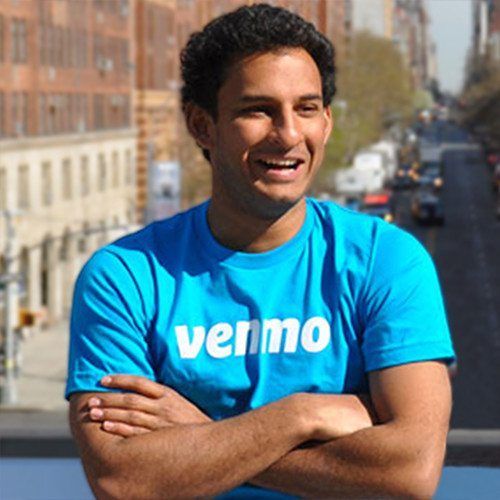
Tony Robbins and Venmo co-founder on finding your own story and getting to “yes”In this episode of the Tony Robbins Podcast we’re continuing our Business Mastery Panelist series with an exclusive interview between Tony and Iqram Magdon-Ismail, the co-founder of the digital payment platform Venmo.
Tony talks to Iqram about the evolution of Venmo from idea to fruition to acquisition, and how they were able to persevere through the darkest periods. They discuss the importance of learning to embrace criticism, creating your company’s story and using the no’s to refine your approach to find that pivotal yes – the yes that allows you to begin to build your business.
Business Mastery
Learn moreWhat is the Venmo app?
In case you’re not familiar with Venmo, the premise is this: You connect the app to your checking account and you can send and receive payments to anyone with just a tap and a swipe of your smartphone. It’s the ideal solution for splitting bills and paying your friends back – especially for anyone who doesn’t like carrying around cash.
Venmo makes exchanging money incredibly easy, and it takes the awkwardness out of asking someone to pay you back. Paying for everything from cab rides to dinners to rent and utilities is streamlined.
Venmo was acquired by Braintree in 2012 for $26.2 million, which in turn sold to PayPal for $800 million. And now, Venmo processes more than $6.8 billion in payments per quarter.
Finding your passion
As ubiquitous as Venmo is today, it wasn’t an easy path to success. Iqram and his co-founder Andrew Kortina endured countless obstacles in their early years, struggled to raise capital and almost closed their doors at one point.
Iqram and Andrew didn’t want to just be business operators – they wanted to be true business owners. They had many entrepreneurial traits, like drive, authenticity and resilience. But they hadn’t yet discovered their passion.
Iqram says, “We didn’t want to chase something that we really weren’t passionate about.” So even though everyone they knew and all of their classmates were working toward traditional careers, they chose to . “We said, ‘Let’s take time to figure out what we’re passionate about.’”